

Indoor air quality affects comfort, focus, and overall health, yet many people are unsure what their home air monitors are actually measuring. Modern devices display multiple numbers, colors, and alerts, but not all of them are equally useful for everyday decisions. For households in the United States, understanding which air quality metrics truly matter can help you respond effectively instead of feeling overwhelmed by data. Understand the most important measurements and how they apply to indoor environments.
Particulate Matter (PM2.5) And Why It Matters
One of the most important metrics on a home air quality monitor is PM2.5. This refers to very small airborne particles that are 2.5 microns or smaller. These particles are small enough to be inhaled deep into the lungs and often come from sources like cooking, wildfire smoke, candles, and outdoor pollution that enters the home.
PM2.5 is especially useful because it changes quickly when indoor air quality shifts. For example, frying food or burning incense can cause levels to spike within minutes. Monitoring this metric helps you decide when to ventilate, turn on an air purifier, or adjust daily habits.
If a monitor tracks only one metric, PM2.5 is often the most practical for everyday use because it directly reflects many common indoor pollution sources.
Volatile Organic Compounds (VOCs) And Chemical Exposure
VOCs are gases released from products like cleaning sprays, paints, air fresheners, furniture, and some building materials. Many air quality monitors display a VOC reading or a combined index based on detected chemical changes.
While VOC readings can be helpful, they are often more general than PM2.5 readings. Many consumer monitors measure total VOCs rather than identifying specific chemicals. This means the number can indicate that air quality has changed, but it does not tell you exactly why.
VOCs are still useful as a warning signal. If levels rise after cleaning, using sprays, or bringing in new furniture, you may want to ventilate the space. Over time, VOC readings can help you learn which activities affect your indoor air most.
Carbon Dioxide (CO2) And Ventilation Awareness
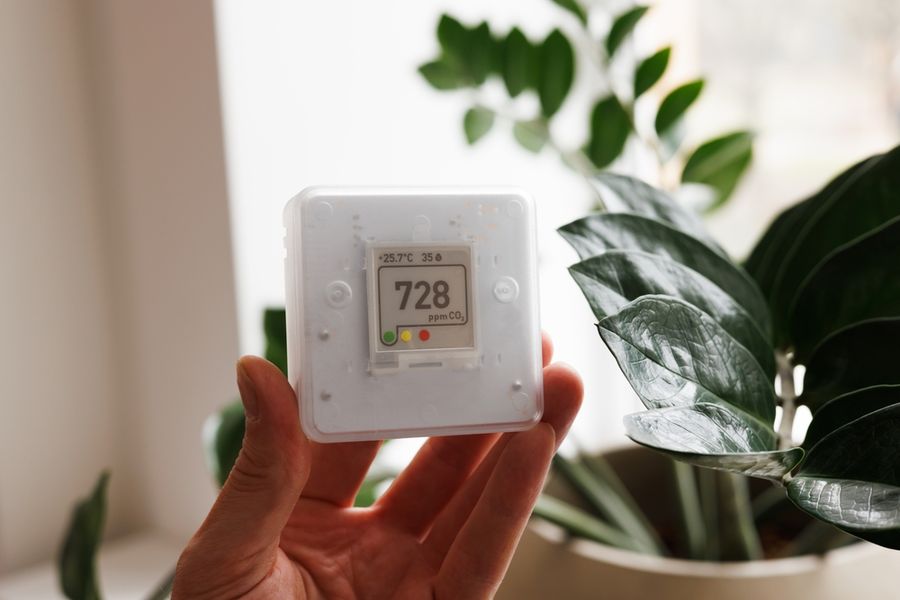
Carbon dioxide is a natural part of indoor air, but high levels can indicate poor ventilation. CO2 builds up when people breathe in enclosed spaces without enough fresh air coming in.
A rising CO2 level does not mean the air is toxic, but it can signal that a room feels stale and may affect focus or comfort. This is especially useful in bedrooms, home offices, or classrooms where doors and windows stay closed for long periods.
Monitoring CO2 helps you understand when opening a window, using a fan, or adjusting airflow might improve comfort. It is less about pollution and more about how fresh the air feels over time.
Temperature And Humidity As Supporting Metrics
Most air quality monitors also display temperature and humidity. While these are not pollution metrics, they strongly affect how air feels and how other pollutants behave.
High humidity can make rooms feel stuffy and support mold growth, while very low humidity can cause dry skin and throat irritation. Temperature interacts with humidity to shape comfort levels throughout the day.
Tracking these values helps you decide when to use a humidifier, dehumidifier, or adjust heating and cooling settings. These metrics work best when viewed alongside pollution data, not as stand-alone indicators.
What To Be Cautious About When Reading Air Quality Scores
Many monitors show a single “air quality score” or color-coded scale. These summaries can be useful at a glance, but they hide detail. Different brands weigh metrics differently, so one device’s “good” rating may not match another’s.
It is more helpful to look at individual readings and watch how they change over time. Trends tell you more than single numbers. A short spike during cooking is normal, while long periods of elevated PM2.5 or VOCs may signal a ventilation issue.
Avoid overreacting to small changes. Home air quality naturally shifts throughout the day. The goal is awareness, not perfection.
Choosing A Monitor Based On Your Living Situation
Not every household needs the same metrics. If you live in an area affected by wildfire smoke or heavy outdoor pollution, PM2.5 tracking should be a top priority. If your home is newer or recently renovated, VOC monitoring may be more relevant.
For people who work from home or sleep in closed rooms, CO2 monitoring adds value by highlighting ventilation needs. Families with children or allergy concerns may benefit from devices that track multiple metrics so patterns become clearer over time.
Ease of use also matters. A monitor that updates clearly and stores history is more useful than one that only shows current readings. The best device is one you can understand and check regularly.
Focus On Metrics That Support Daily Decisions
Home air quality monitors are most useful when they focus on metrics that lead to clear action. PM2.5 helps track airborne particles from daily activities. VOC readings highlight chemical changes. CO2 points to ventilation needs.
Temperature and humidity provide comfort context. By paying attention to these core metrics and watching trends over time, you can make smarter, calmer decisions about your indoor air and create a healthier living space without unnecessary complexity.